Eye Exams
Test yourself in a mini quiz (below).
Read about the exams you will undergo
with us.

Quick Vision Test
Alright, let’s start with something easier.
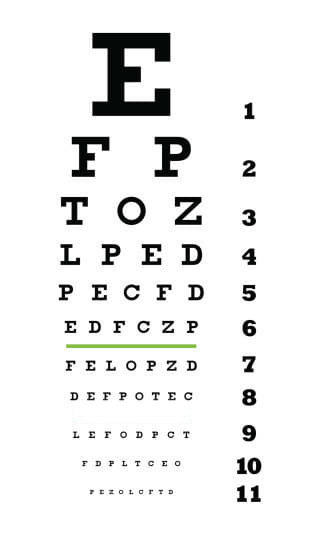
Did you manage?
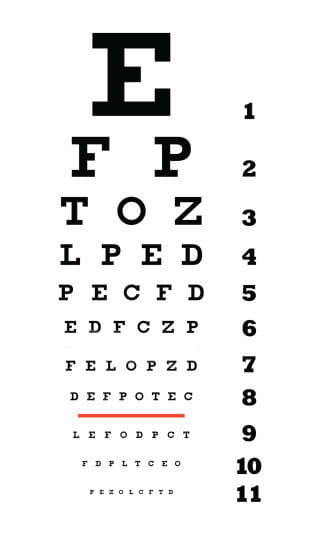
What next?
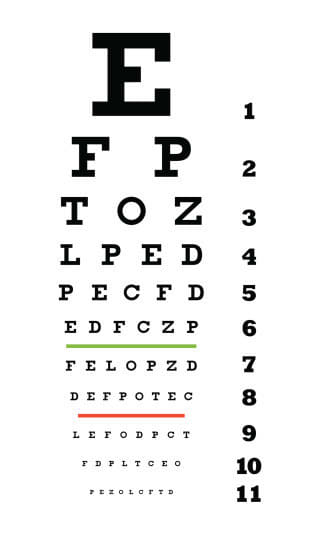
Switch eyes
How’s your night vision?
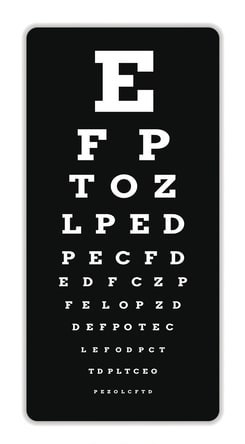
Excellent
Final challenge

You might also be interested in:
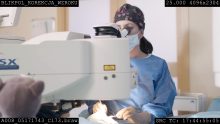
Eye examinations – eye diagnostics
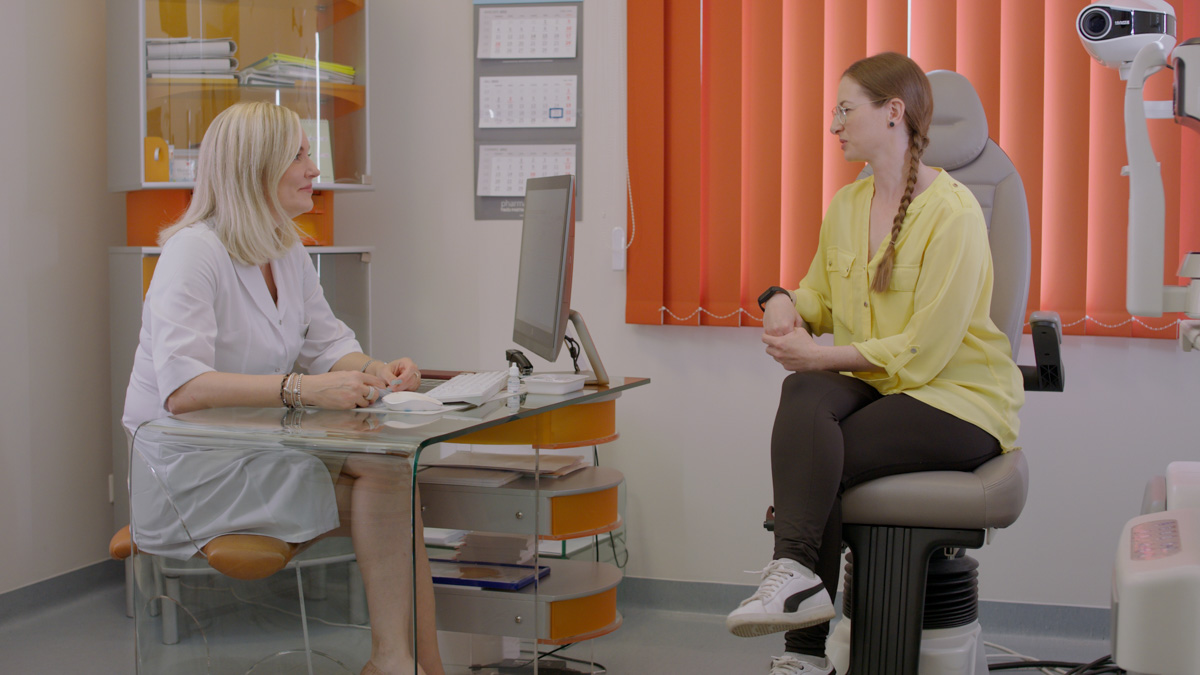
A proper diagnostic process requires attentiveness and careful listening from our doctors to your history. Let’s illustrate this. Mrs. Zofia, a 75-year-old from Gdańsk, was waiting in line for cataract surgery. Her ophthalmic clinic had performed eye examinations, but she was still waiting for OCT, which she had to wait for in a relatively long queue.

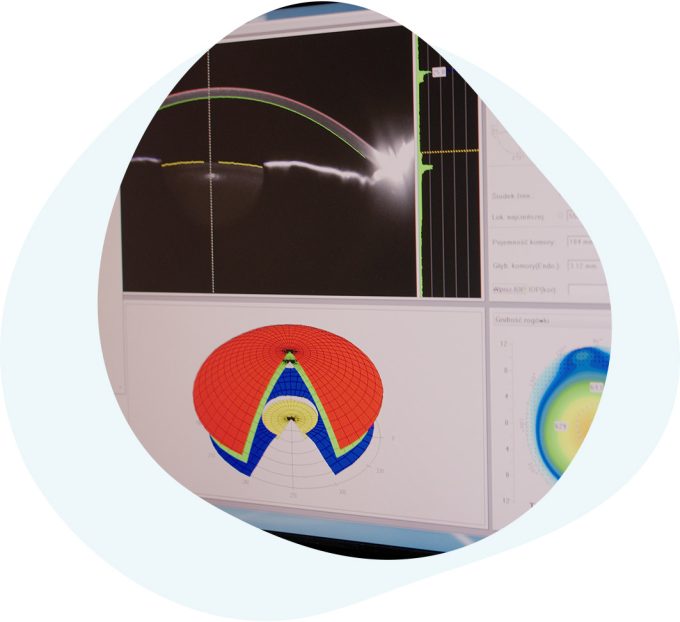
Mrs. Zofia described to the doctor how her vision had dramatically worsened quite suddenly, yet she was reassured and asked to calmly await the final eye examination. Mrs. Zofia’s daughter-in-law, who was our patient, suggested a visit to us for a second opinion. Dr. Chomińska was immediately able to diagnose that it was not progressing cataracts causing the practical loss of vision in one eye. It was retinal detachment. Mrs. Zofia immediately received suggestions from us on where and from whom she could now undergo effective surgery. Of course, an OCT examination would have revealed the true problem, but the lack of a correct diagnosis at the first visit meant a real loss of time and a threat to the safety of the patient’s vision.
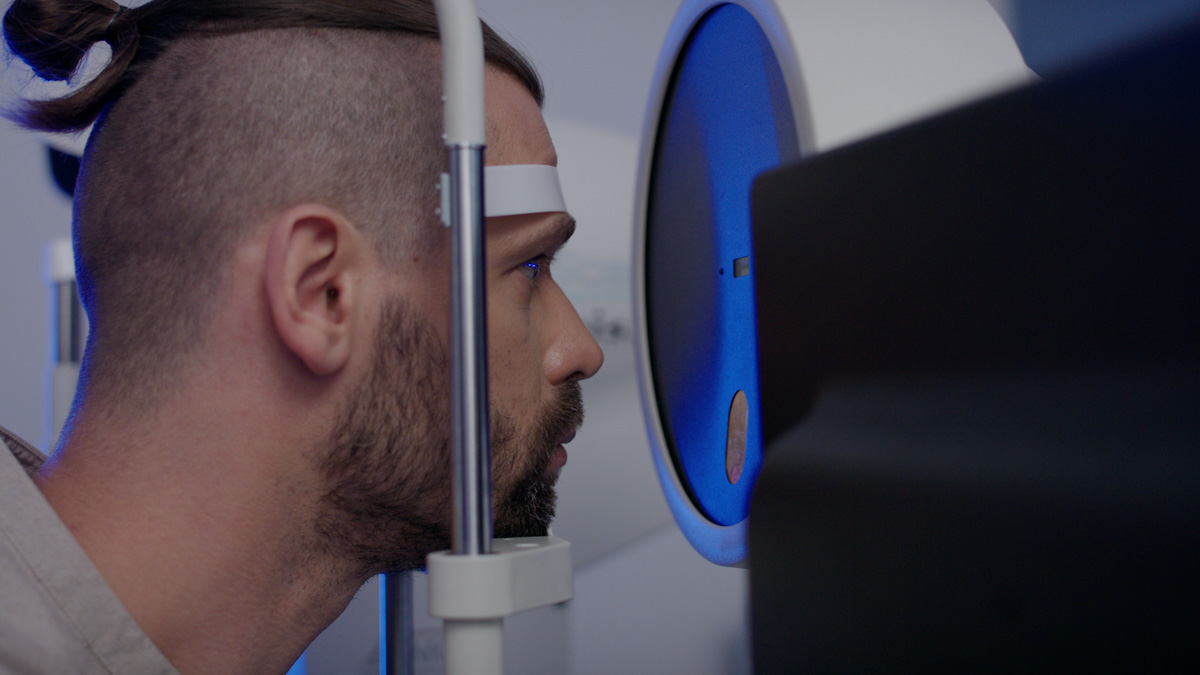
In our center, you will undergo examinations such as:
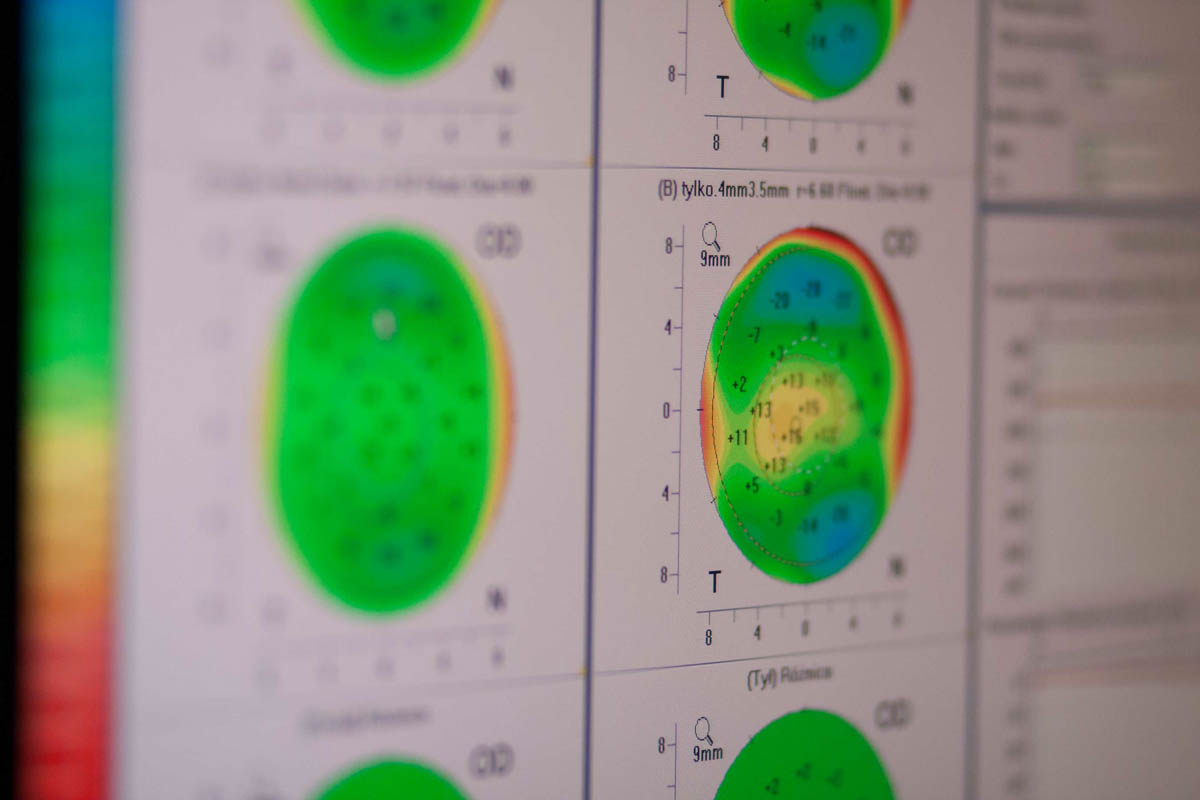
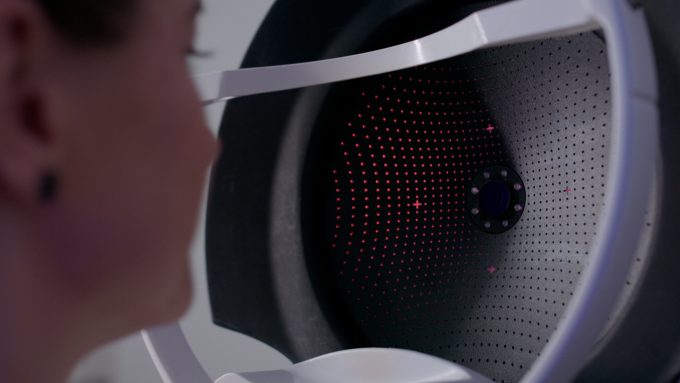
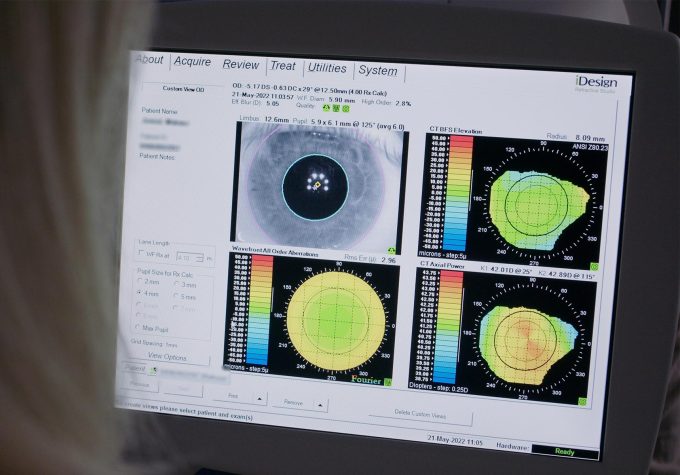
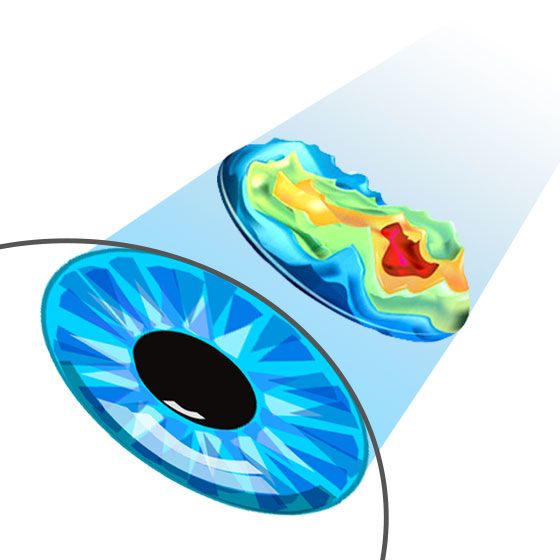
- iDesign (obtained highly accurate eye maps along with analysis of higher-order aberrations used in our procedures)
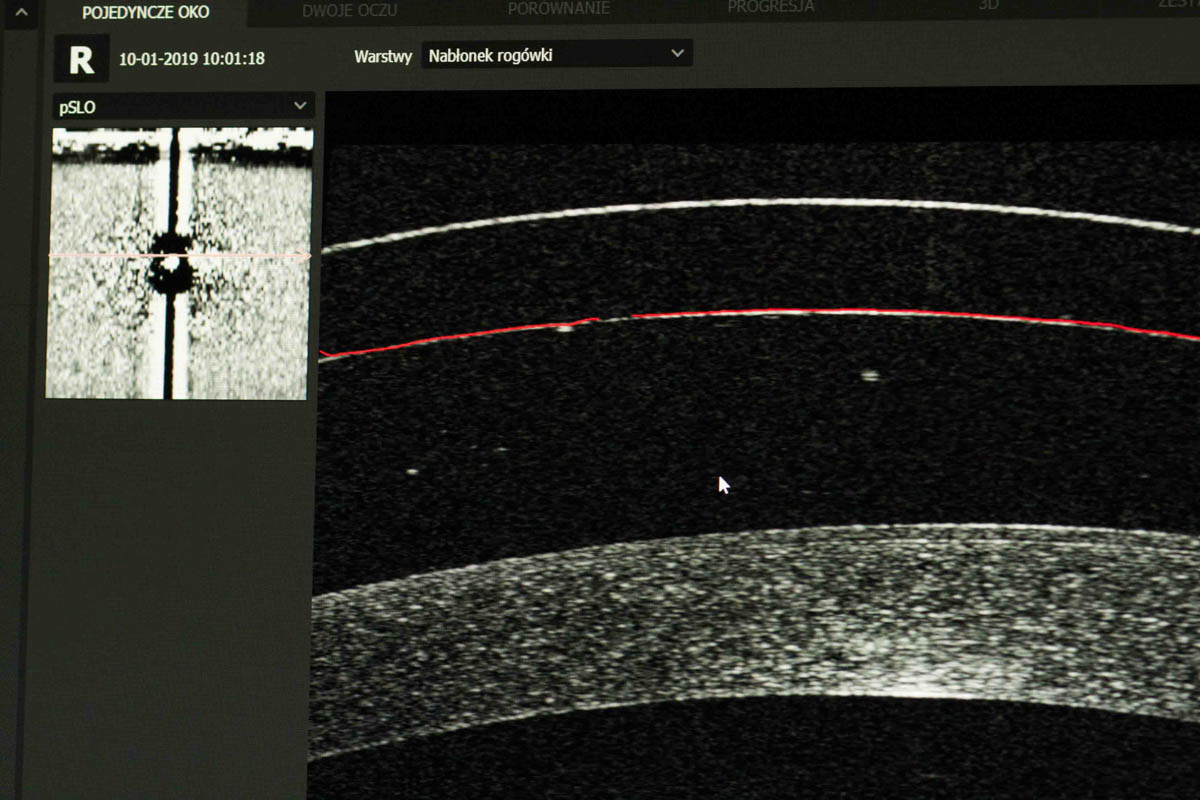
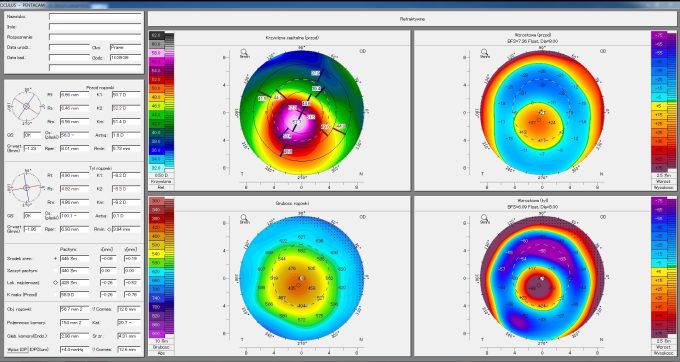
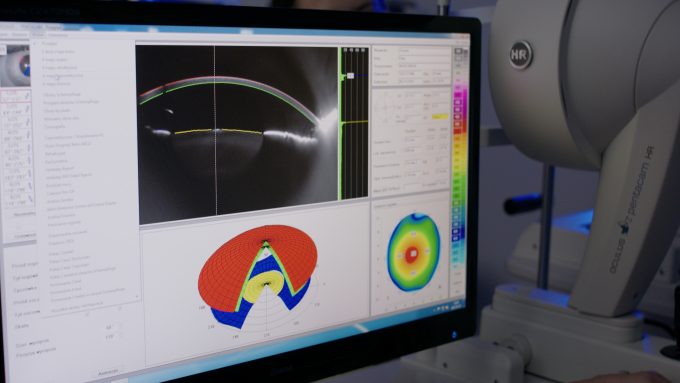
Tomography + 3D topography on Pentacam (provides a very accurate imaging and analysis of the anterior part of the eye, angles, curvatures, opacity) - OCT 3D retinal tomography (allows us to detect any changes in the eye’s structure)
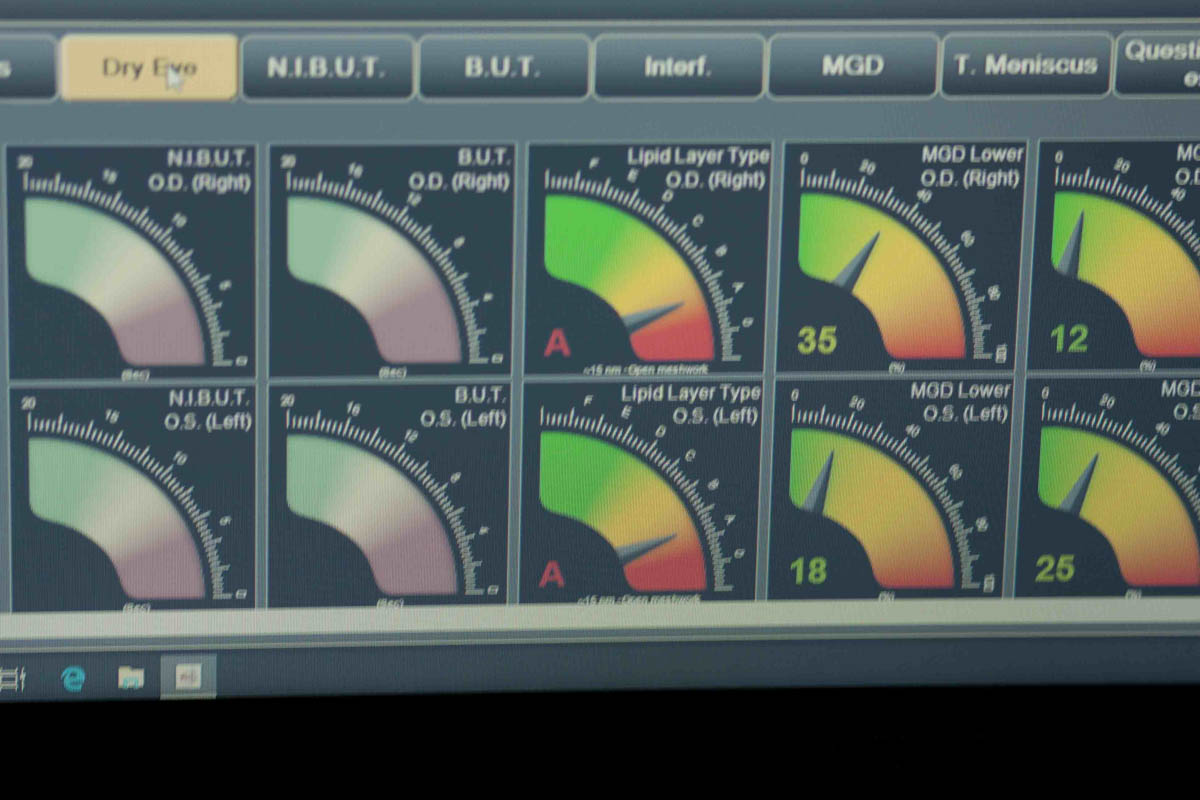
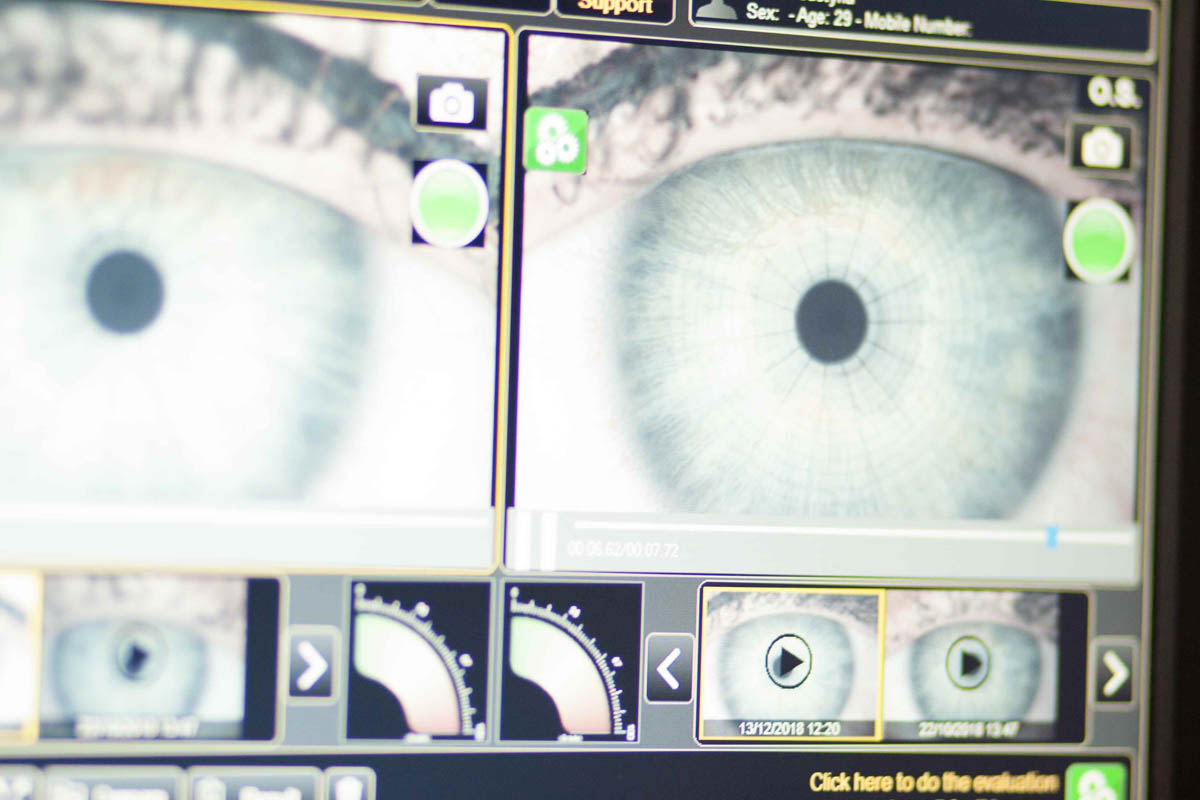
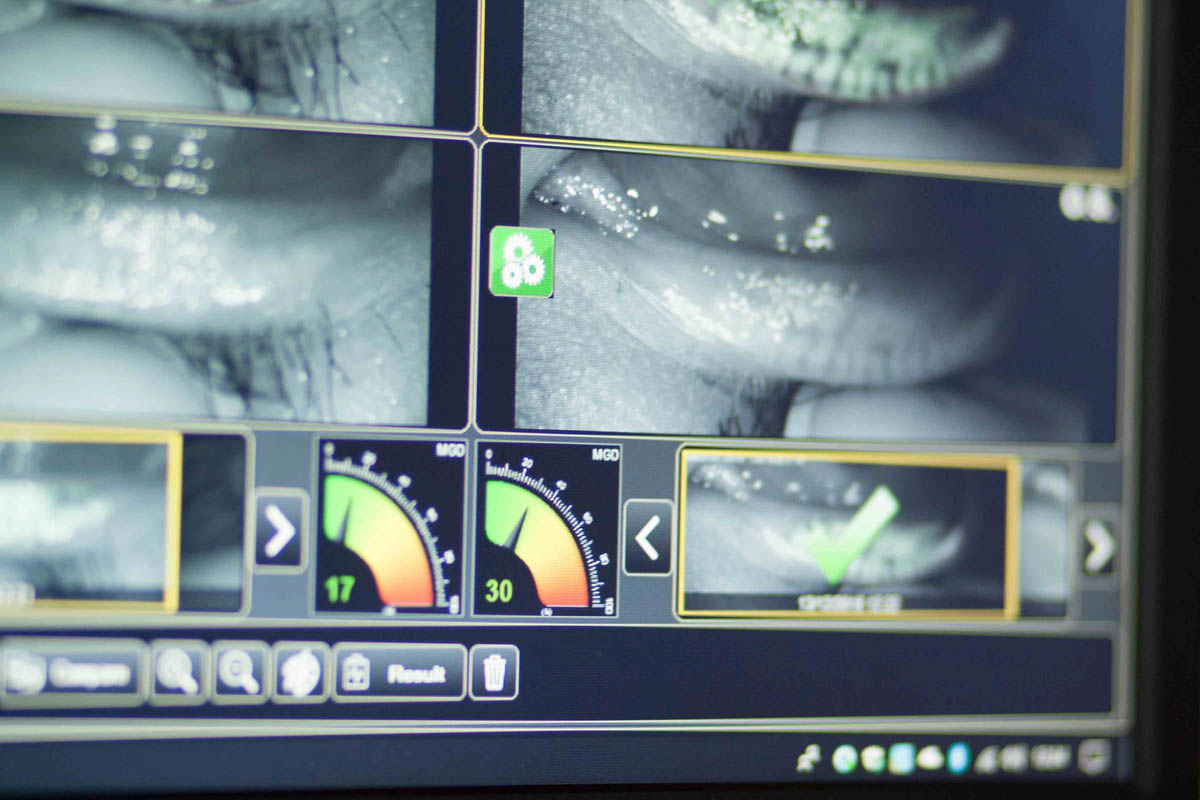
Comprehensive examination of tear film layers in an OSA camera (allows precise diagnosis of Dry Eye Syndrome and identifies sources of problems) - Non-contact tonometry iCARE (measurement of intraocular pressure – quickly and safely)
Optical biometry on IOL Master (allows highly accurate calculation of lens power for intraocular implants)
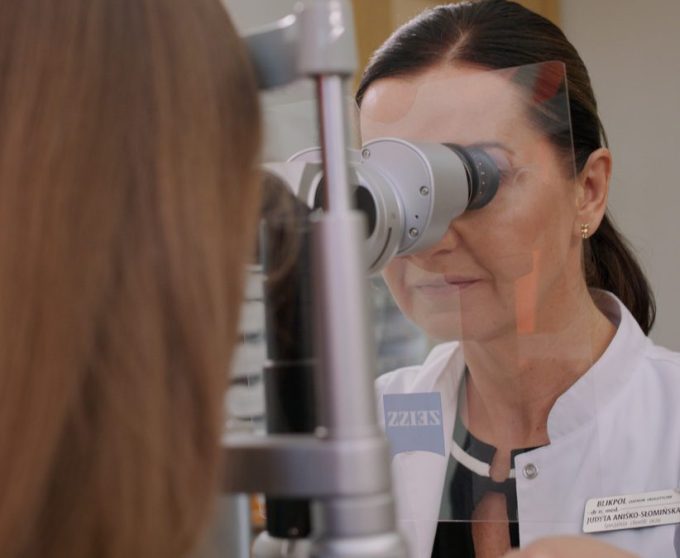
Online eye test – worthwhile!
Access to excellent equipment and extraordinary possibilities of looking into our eyes and measuring their various characteristics is one thing. Equally important is the second component: the correct interpretation of numbers, maps, sections, and scans, which is the domain of experienced doctors and their diagnostic sense. Examine your vision today!
Selecting appropriate eye examinations, accurately defining the problem, requires an extensive amount of history our doctors have already learned, thousands of results they have seen, numerous unusual cases and situations they have dealt with. Continuous desire for further education and development. At Blikpol, we have the pleasure of offering you access to some of the best doctors and surgeons in their specialties in Pomerania. Learn more about our ophthalmologists.
How to test your vision yourself?
You can perform a vision test on our website above. Thanks to it, you can find out if you should visit an ophthalmologist. An online eye test can only suggest further actions. Using such a test can take place between one visit to a specialist and another. If you can clearly see the image from the given distance, it means that the online eye test indicates that your vision is healthy. However, if you were unable to correctly read all the letters, it may indicate vision problems.
An online eye test, or our test, aims to detect abnormalities in vision, and the result obtained in this way may serve as motivation to encourage you to visit a specialist. An online eye test can signal a problem in its early stages, so it’s worth using it periodically. Vision problems affect many people, so regularly examine your vision.
People should undergo eye examinations by an ophthalmologist regularly:
- The first examination should take place between the ages of 2 and 3.5 years.
- School-age children undergo annual follow-up examinations, so there is no need to visit an ophthalmologist more often than once every three years.
- Between the ages of 20 and 39, if they do not have vision problems, they can also reduce the frequency of visits to once every two or three years.
- People over the age of forty should visit an ophthalmologist annually.
Online eye testing and performing our test can only be a suggestion that will direct you to see a specialist. The results of the examination allow the diagnosis of diseases such as cataracts or glaucoma, as well as the selection of appropriate treatment or the determination of the need for wearing glasses or contact lenses.
What does an ophthalmic examination include?
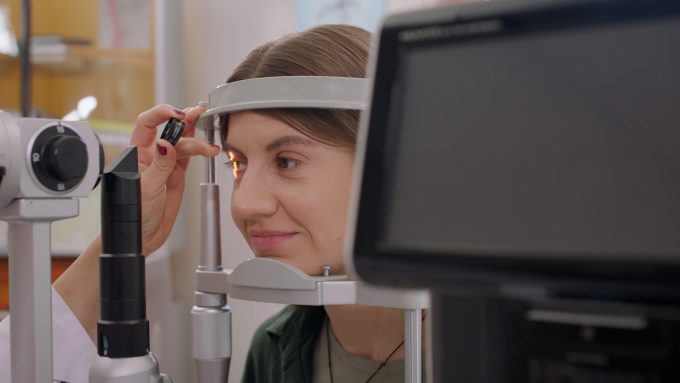
An ophthalmologist conducts an eye examination, which involves diagnosing and treating eye diseases. Such an eye examination consists of two parts: a medical interview and an examination. The medical interview helps determine whether the patient suffers from chronic diseases and what his or her vision difficulties are. During the eye examination, the ophthalmologist evaluates visual field, visual acuity, color vision, and also performs an examination of the anterior and posterior segments of the eye. A comprehensive eye examination allows to determine whether there is a vision problem.
Currently, many people work with computers, which has a detrimental effect on visual comfort – reducing the frequency of blinking while working at the screen causes drying of the conjunctiva and cornea, so it is always worth having eye drops at hand to ensure optimal moisture level for your eyes.
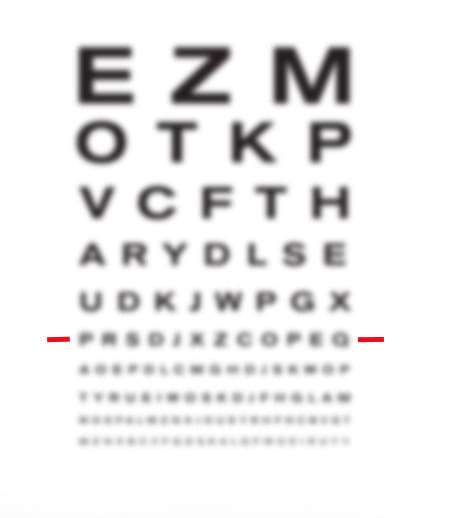
In an ophthalmic office, similarly to our online test, the Snellen test, i.e., reading characters of various sizes from a chart, is conducted in two ways. Close-up and from a distance. The test ends when the patient cannot read the indicated sign.
Visual comfort is fundamental! Regularly check your eyesight
Control your visual field with simple tests we have prepared for you. Vision problems can often be caught even in online tests, so regular check-ups are simply advisable. Of course, you cannot rely solely on online tests. If you want to enjoy exemplary vision, have your vision checked at least once a year!
Remember to regularly visit an ophthalmic office, as the test takes only a few minutes, is painless, and completely safe. Do not postpone your visit, especially if you have any vision problems. It will also help detect any diseases in a very early stage and minimize their negative impact on your health. Examine yourself today and take care of yourself and your loved ones!
Can a stand-alone eye exam be authoritative?
Stand-alone eye tests can be useful as an initial assessment, especially if you notice a sudden deterioration of vision or other worrisome symptoms. They can also help you monitor the condition of your vision between visits to a specialist. Remember, however, that they should not replace regular eye exams.
Limitations of home testing
- Precision of tools: Tests available online or smartphone apps cannot compare to professional ophthalmic equipment, which is more precise.
- Complexity of problems: Some vision problems, such as astigmatism, glaucoma or cataracts, require specialized tests that cannot be performed at home.
- Lack of complete diagnosis: Self-testing can only indicate certain problems, but cannot make a full diagnosis or suggest appropriate treatment.
Benefits of seeing a specialist
- Comprehensive evaluation: An ophthalmologist will perform a complete eye examination, including visual acuity assessment, fundus examination, measurement of intraocular pressure and other necessary tests.
- Individualized approach: The specialist will take into account your individual needs and medical history, allowing for a more accurate diagnosis and selection of appropriate treatment or vision correction.
- Early detection of diseases: Regular visits to an ophthalmologist can help detect serious eye diseases early, which can lead to vision loss if not treated in time.
Online eye test – what to do to make the test reliable?
Online eye tests are becoming increasingly popular as a quick way to make an initial assessment of our vision. While they cannot replace a full examination by a specialist, there are ways to make them more reliable and helpful. That’s why we recommend our vision test, because this one was created through the work of authorities in their field – ophthalmologists with many years of experience, for whom visual acuity testing is a daily occurrence.
Testing visual acuity at home usually takes several to several minutes. This time can vary depending on the type of test and the level of detail. Basic visual acuity tests, available online, usually take about 5-10 minutes. If the test also involves checking color vision, astigmatism or peripheral vision, it can take a bit longer, usually up to 15 minutes. To get reliable results, it is important to spend enough time preparing the right conditions for the test and the test itself, following the instructions exactly.
Important questions and answers
-
When visiting an ophthalmologist, various tests may be performed, depending on the reason for the visit and the patient’s symptoms. Here are some common tests: 1. visual acuity test: checks how well you can see at different distances. 2. fundus examination: assesses the health of the retina and optic nerve. 3. Tonometry: measures the pressure inside the eye to check for the risk of glaucoma. 4. Perimetry: tests the visual field. 5. Refraction examination: determines the correction needed (e.g., glasses or contact lenses). 6. Corneal and lens examination for cataracts. It all depends on the patient’s individual situation.
-
Seeing an ophthalmologist without a referral is possible and often recommended when certain symptoms or situations are present. Here are some examples: 1. sudden loss of vision or change in vision. 2. severe eye pain. 3. Sudden appearance of “dark circles” or “flashes” in the visual field. 4. Red, itchy or watery eyes. 5. prolonged headaches. 6. If the person has a systemic disease affecting vision, such as diabetes. 7. Regular eye check-ups, especially for people over 40. Remember that protecting your eyesight is important. Don’t ignore eye problems and don’t delay seeing a specialist.
-
The duration of an eye exam can vary depending on what tests are performed. A standard eye exam, which includes a check of visual acuity, a refraction test (to determine a prescription for glasses or contact lenses) and a basic eye health examination, usually takes 20 to 30 minutes. If the doctor decides to perform additional tests, such as a fundus examination or eye pressure measurement, the examination may take longer.
-
It is usually safe to drive after a standard eye exam. However, if you have used pupil-dilating drops (atropine, tropicamide) during the test, which increase photosensitivity and may temporarily impair visual acuity, it is best to avoid driving for several hours after the test. Always consult your doctor before driving after the test.
-
Before the eye test, it is recommended: 1. do not wear contact lenses for at least several hours before the test, as they may affect test results. 2. Avoid consuming alcohol, which can affect your ability to read the test boards. 3) If you are scheduled to be tested with pupil-dilating drops, take sunglasses with you, as your eyes may be more sensitive to light after the test. 4. remember to bring your current glasses or contact lens prescription. These rules will help the doctor assess your eye health and vision as accurately as possible.
-
An online vision test can help detect several basic vision disorders. These include visual acuity problems such as nearsightedness (myopia) and farsightedness (hyperopia), as well as astigmatism, which causes blurred vision at various distances. These tests can also indicate potential difficulties with color vision, which can suggest daltonism. While online tests are useful for initial evaluation, they are not a substitute for a full diagnosis by an ophthalmologist, who can detect more complex eye health problems.
Price List