Table of Contents
Hyperopia is one of the most commonly encountered vision defects. How does it work? Farsightedness occurs when light rays focus behind the retina, causing objects seen up close to appear blurry.

Example? If you have hyperopia, you can see tree leaves, mountain peaks, and even signs on the other side of the street clearly. However, it becomes more difficult to focus on objects that are a bit closer, right?
Reading or playing on a tablet, on the other hand, is impossible without glasses or contact lenses. You might not know this, but natural hyperopia occurs in 90% of young children. This percentage decreases with age.
Hyperopia – What you need to know
Hyperopia problems often resurface in old age, but at that point, the condition is slightly different and is referred to as presbyopia. One thing is certain – hyperopia is a serious condition that should not be ignored!
To pinpoint the exact cause of hyperopia, it’s important to focus on the structure of the eye, which is typically abnormal in this case. In adults, the cornea often has an irregular shape, while in children (as we explain later), hyperopia is due to an excessively spherical eyeball. Different causes of hyperopia are related to age-related changes, which we can categorize as presbyopia.
Additionally, there may be genetic causes of hyperopia, as this refractive error is recognized as hereditary. It doesn’t always manifest immediately. In children and adolescents, the eye constantly maintains accommodation tension, meaning it is always ready to adjust to the surrounding environment. This happens regardless of the distance or size of the viewed object, allowing children and young people to nearly fully compensate for the vision problem, which often goes undiagnosed. As a result, they may not feel the need to wear corrective glasses or contact lenses.
Unfortunately, there is currently no cure for hyperopia. However, there are many methods available to help manage it.
Hyperopia has various causes and symptoms, which can differ with age, although many studies suggest that it is most commonly a genetic condition or a result of long-term untreated accommodation issues.
Hyperopia Causes:
- Blurred vision up close due to light focusing behind the retina.
- Eye fatigue caused by straining to focus for a clear image.
- Headaches and eye pain.
- Frequent accommodation symptoms – watering of the eyes.
- Pain in the eyeball (tension).
- Problems with convergent strabismus (crossed eyes) in young children. In cases of severe hyperopia, there may be a risk of binocular amblyopia (lazy eye).
- It’s important to know that hyperopia in its early stages is almost undetectable. Symptoms related to hyperopia may manifest as mild blurred vision for objects up close, while distant objects can still be seen clearly.
As the condition progresses, the sharpness of near vision may deteriorate significantly. The severity of hyperopia and its accompanying symptoms can vary across different age groups.
As people age (especially after 40), the eye’s ability to accommodate, or adjust vision for different distances, diminishes.
One thing is certain: you should not ignore any troubling symptoms! It is advisable to consult an ophthalmologist as soon as possible to at least get contact lenses fitted. Hyperopia is an ongoing issue that can affect individuals at any age.
Types of Hyperopia:
Hyperopia can be classified according to the degree of severity:
- First degree (clinical) hyperopia – This is a refractive error that occurs without any apparent cause.
- Second degree (pathological) hyperopia – This results from injury, abnormal development of the optical system, or disease (e.g., physiological hyperopia in children).
- Third degree (functional) hyperopia – The eye’s optical system becomes impaired and cannot automatically adjust to the visible image.
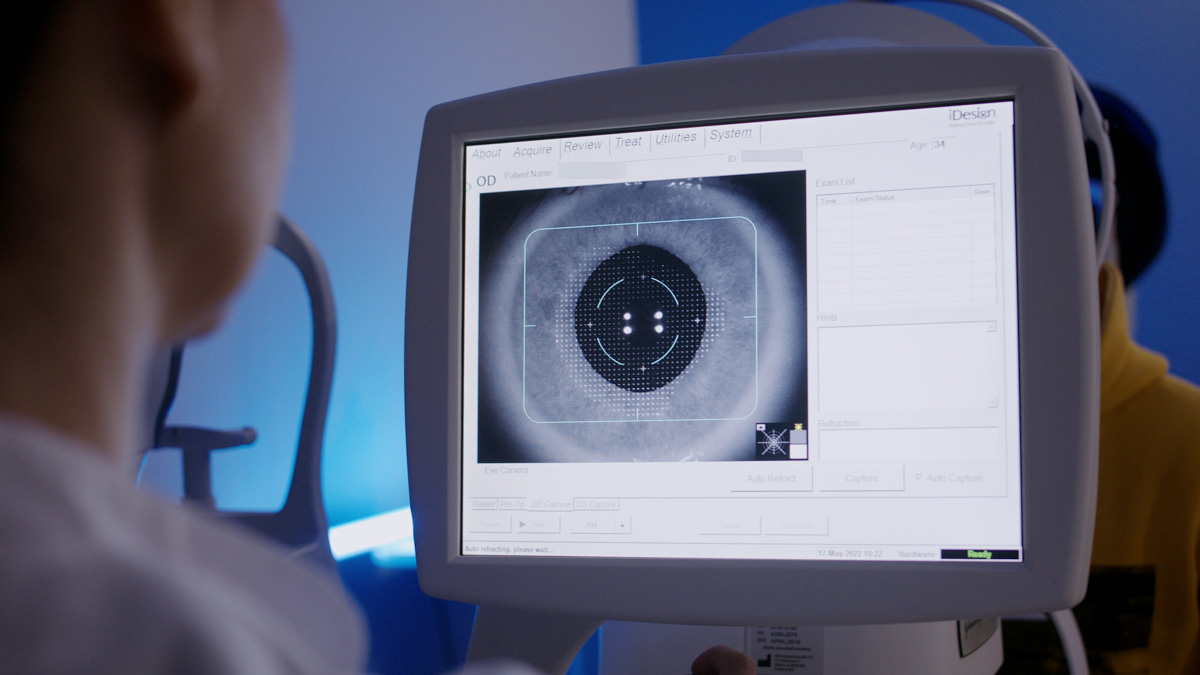
The stages of hyperopia (farsightedness) are:
- Mild hyperopia – up to 2.5 diopters,
- Moderate hyperopia – from 2.5 diopters to 6 diopters,
- High hyperopia – hyperopia above 6 diopters.
Regardless of the stage, hyperopia should never be ignored. The most important step is to consult your ophthalmologist as soon as possible to start appropriate treatment or undergo a procedure!
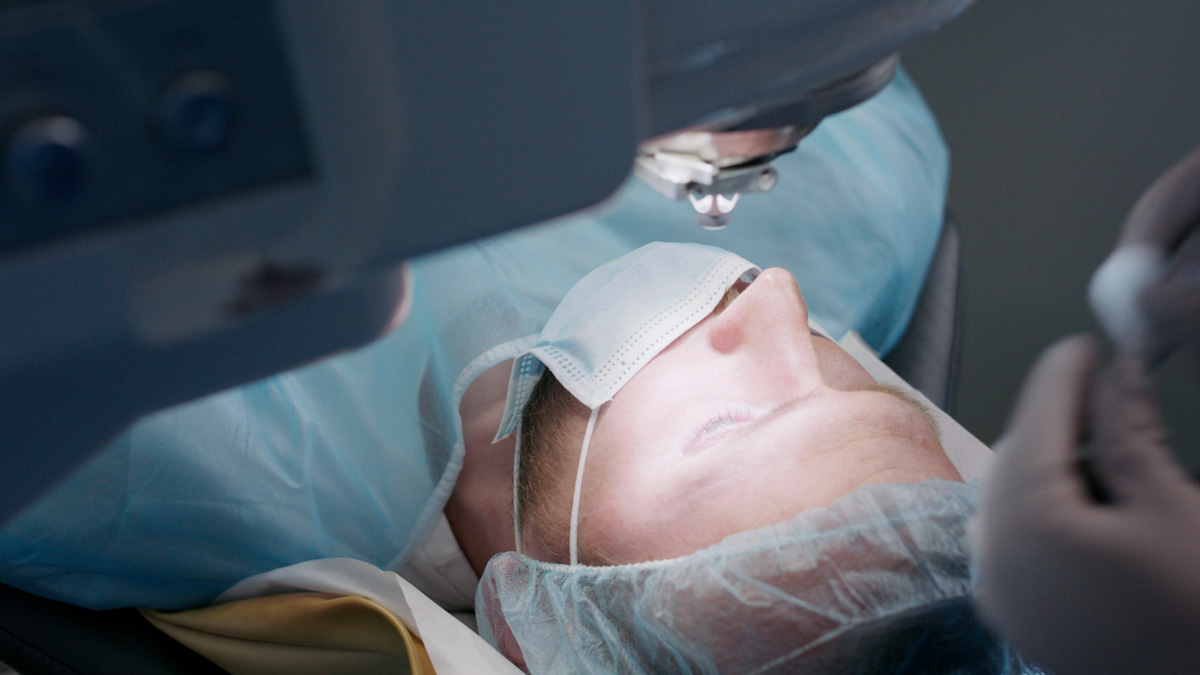
Treatment of Hyperopia (Farsightedness)
If the eye functions properly, you perceive all objects clearly, regardless of their distance. The correct structure of the eye consists of the eyeball, which influences the shape of the image seen. The ciliary muscle of the eye is also important, as it is relaxed when looking at distant objects. It’s worth taking care of it preventively — exercises to relax accommodation tension and taking short breaks from visual work can be beneficial for people who work long hours at a monitor or read a lot. Simply using contact lenses may not be enough.
In the case of all vision defects, light rays are not focused on the retina, so you always see a distorted image.
Vision defects can be easily corrected with appropriate glasses or contact lenses, which are designed to focus light directly on the retina.
Similarly to myopia (nearsightedness), farsighted individuals commonly “manage” their condition by eliminating its symptoms. The most commonly used solution is to correct hyperopia with convex lenses or contact lenses marked with a (+) sign. This is also the only method applicable to children and teenagers, whose eyes are still growing.
In the case of adults with a stabilized condition, we have more options. Hyperopia can be treated together — through laser eye surgery.
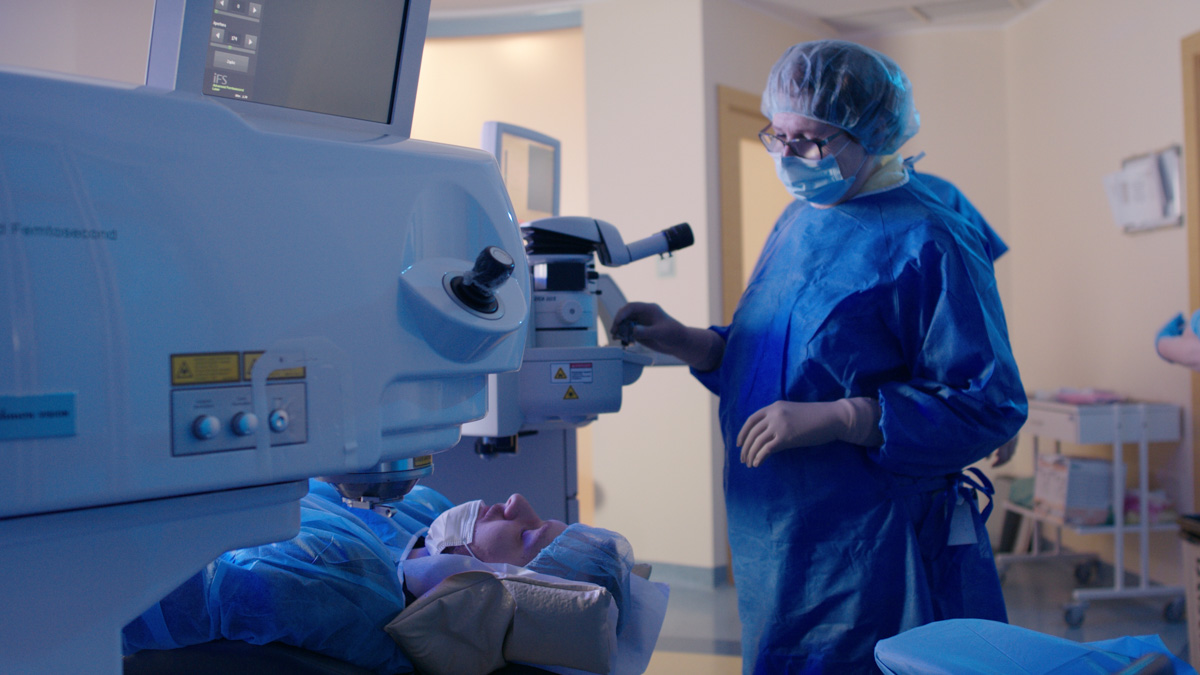
At Blikpol, we correct hyperopia up to around 6 diopters! During the laser procedure, the shape of the cornea is modified – the laser pulses in such a way that the cornea becomes slightly more convex, which corrects the structure and function of the eye.
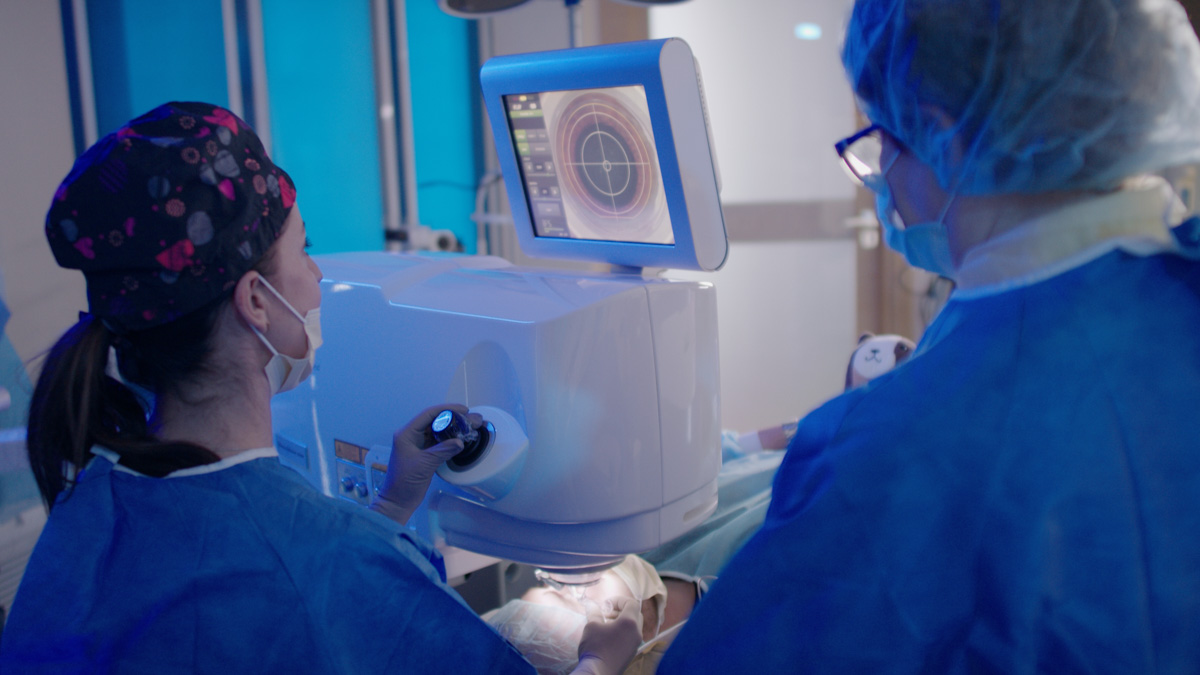
Take Care of Yourself After the Procedure!
Although the hyperopia reduction procedure itself only takes a few minutes, the time following the operation is just as important. After returning home, remember not to expose your eyes to light from the television or computer screen. Immediately after the procedure, your eyes will be very sensitive and can tire quickly. Many patients report light sensitivity, so it’s important to reduce the amount of light in the room. The best remedy is sleep, so take a nap for a few hours instead of straining your eyes unnecessarily.
Remember that eye surgery will permanently and effectively eliminate hyperopia. Untreated hyperopia can lead to serious consequences, such as headaches, constant discomfort, and itching.
At Blikpol, we want you to enjoy the full effects of the surgery and the shortest recovery time possible. That’s why, for the first year after the procedure, it’s essential to carefully follow your ophthalmologist’s recommendations. Attend follow-up appointments to ensure that the problem of farsightedness is resolved for good.
Hyperopia in Children
Laser eye surgery (for hyperopia or other vision defects) cannot be performed when the condition is not stable. This primarily applies to children. However, if your child shows concerning symptoms and is old enough to reach the devices used for eye exams, we can examine them thoroughly and provide recommendations for vision correction.
It’s important to distinguish between physiological hyperopia, which affects almost all children aged 0-3 and is a completely normal phenomenon, and hyperopia that develops later in life.
If your child is squinting more often, struggling with tasks that involve close vision (e.g., not wanting to draw or read), it may be due to a vision problem, such as hyperopia. It’s important to investigate the cause thoroughly, as even mild symptoms of hyperopia can lead to a reluctance to learn or cause persistent, severe headaches. It could also be due to another issue, such as lazy eye (amblyopia), where one eye has reduced vision. This condition must be detected as early as possible. Early detection in children is crucial because it allows for corrective exercises and the restoration of binocular vision.
Without a regular training program, a young person may unfortunately grow up with monocular vision, as one eye will be weaker. While it’s still possible to strengthen the weaker eye later in life, the results will be less effective than if exercises were implemented earlier. The brain remains plastic, but this plasticity decreases over time (although never entirely). It’s important to keep this in mind!
Important questions and answers
-
People with hyperopia (farsightedness) have difficulty with the sharpness of vision for objects that are close, while objects in the distance are seen relatively clearly. The problem arises because the light entering the eye focuses behind the retina, rather than directly on it. As a result, images or text at close distances can appear blurred or distorted, which is especially noticeable during activities like reading or working at a computer.
-
Farsightedness (hyperopia) can worsen in some people with age. As the eye ages, the lens’s ability to change shape (accommodation), which is necessary for sharp near vision, may decrease. This process can cause people who already have farsightedness to notice a decline in their near vision clarity or require stronger optical correction over time. It’s important to have regular eye check-ups to ensure optimal correction.
-
To correct farsightedness (hyperopia), lenses with a positive power are used, which are also called converging or focusing lenses. In the case of hyperopia, the lenses are thicker in the center than at the edges. On eyeglass prescriptions, the power of such lenses is denoted by the plus sign (“+”). For example, a person with +2.00 D (diopters) of hyperopia would need lenses that converge light, helping to bring images into focus on the retina, improving the clarity of near objects and, in some cases, also distant objects.
-
The diopter value for farsightedness (hyperopia) is positive (+) and can vary depending on the degree of the condition: Mild hyperopia: +0.25 to +2.00 D Moderate hyperopia: +2.25 to +5.00 D High hyperopia: above +5.00 D
-
No, hyperopia (farsightedness) and astigmatism are two different vision defects, although they can occur simultaneously. Both conditions can be corrected with glasses or contact lenses, and in some cases, also with laser treatments.
You might also be interested in:
If you want to watch videos of the vision correction process for 6 of our patients and read many other testimonials, click the button.